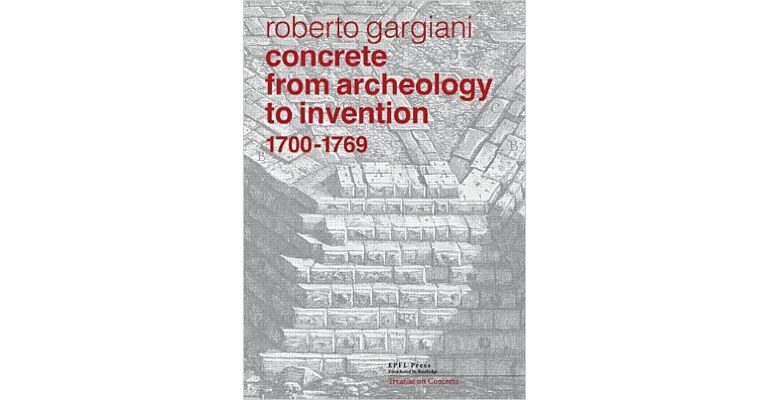
Concrete - From Archeology to Invention 1700-1769

€ 129,50
The book traces the various criteria for concrete production using local materials, from hydraulic lime to pozzolana and trass, as well as how the technique of casting concrete in formwork developed from construction-site practices that had survived locally from the times of ancient Rome. The subjects of the book include the transport of Roman pozzolana with which Italian, French, English or Danish engineers built grandiose offshore concrete structures; the genealogy of techniques for manufacturing wood formwork for foundations at sea, in rivers and above ground; the description of the various formwork systems invented to pour concrete in water; the research conducted by chemists on lime and pozzolana that led to the development of concrete; the invention of artificial stone, obtained using various types of cement; and the series of fantastic archaeological findings about the concrete structures of antiquity, which, even if sometimes baseless, nevertheless helped build confidence that this material could be invented. Finally, several great personalities in the history of architecture, such as Piranesi or Soufflot, are presented in a new light and are shown to be vital players in the affirmation of concrete in the eighteenth century.
Author Roberto Gargiani
Language English
Published 2013
Binding HBK
ISBN 9780415833462
  • We ship daily
  • Payment options