JavaScript seems to be disabled in your browser. For the best experience on our site, be sure to turn on Javascript in your browser.
We use cookies to make your experience better. To comply with the new e-Privacy directive, we need to ask for your consent to set the cookies. Learn more.
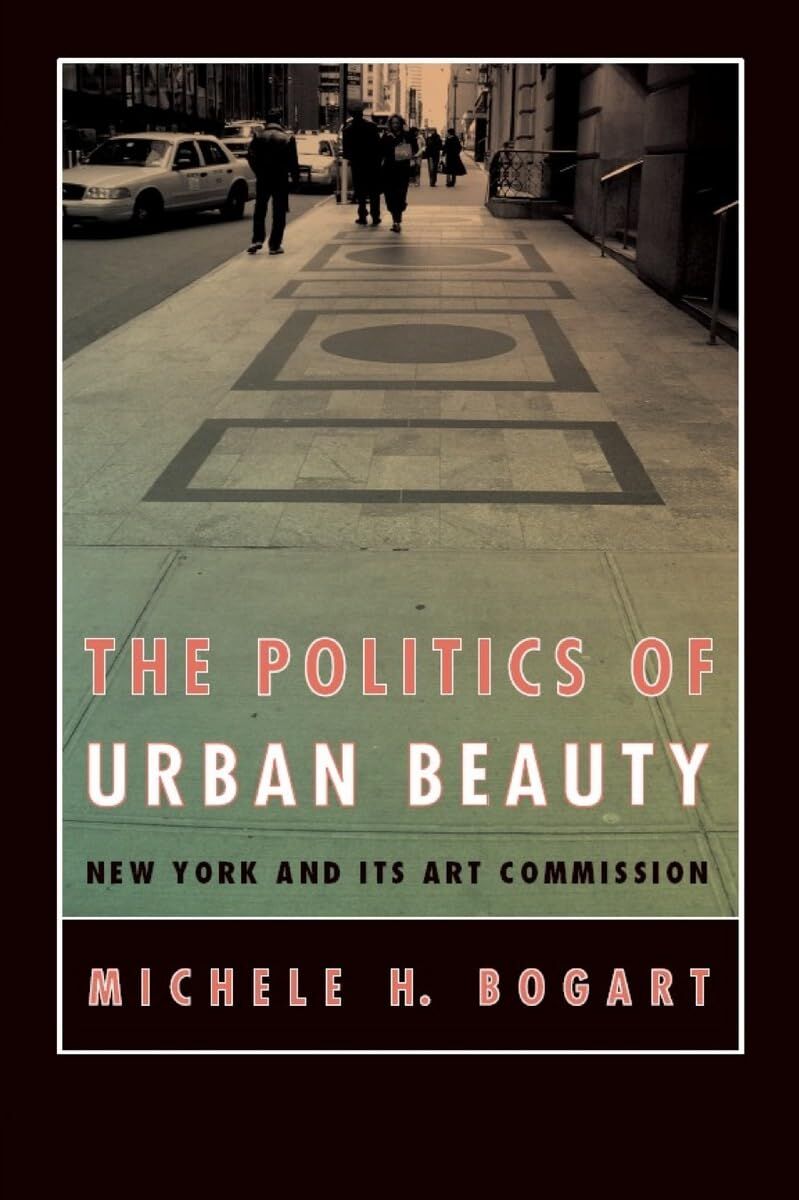
Since its founding in 1898, the Art Commission of the City of New York (ACNY) has served as the city's aesthetic gatekeeper, evaluating all works of art intended for display on city property. And over the years, the commission's domain has expanded dramatically to include everything from parks and courthouses to trash cans and sidewalks. In ThePolitics of Urban Beauty, Michele H. Bogart argues that this unprecedented authority has made the commission host to some complex negotiations--involving artists, architects, business leaders, activists, and politicians--about not only the role of art in urban design, but also the shape and meaning of the city and its public spaces.
A former vice president of the ACNY, Bogart tells its story here from an insider's perspective, tracing the commission's history from its origins as an outgrowth of progressive reform to its role in New York's reconstruction after 9/11. Drawing on archival correspondence, drawings, and photographs from commission collections, Bogart presents bracing examples of works--ranging from New Deal murals to Louis Kahn's unbuilt Memorial to Six Million Jewish Martyrs--that illuminate the ACNY's subtle yet powerful role in shaping New York's identity.